granola recipe
Homemade Granola Recipe: A Nutritious and Delicious Way to Start Your Day
Making your own granola is a great idea for several reasons. Firstly, it is often more nutritious than store-bought varieties, since you can control the type and quality of the ingredients you use. Secondly, homemade granola is often considerably cheaper in the long run since you can buy the ingredients in bulk. Thirdly, making granola at home allows for an incredible level of customization, ensuring that each batch will be unique and tailored to your specific tastes and dietary restrictions.
Ingredients
In order to make a basic batch of granola, you will need the following ingredients:
- 3 cups rolled oats (not instant oats)
- 1 cup nuts (such as almonds, pecans, or walnuts), roughly chopped
- 1/2 cup seeds (such as sunflower or pumpkin seeds)
- 1/2 teaspoon salt
- 1/2 teaspoon cinnamon
- 1/2 cup melted coconut oil or other oil
- 1/2 cup liquid sweetener (such as maple syrup), honey or agave nectar
- 1 teaspoon vanilla extract
It is important to choose high-quality ingredients when making granola. Opt for non-GMO and organic options whenever possible. Additionally, feel free to substitute certain items based on preference or availability. For example, you can swap out pecans for cashews or use dried cranberries instead of raisins.
Equipment Needed
The equipment needed to make homemade granola is relatively minimal and likely already available in most kitchens. You will need:
- Baking sheets
- Mixing bowls (preferably one large bowl and one smaller one)
- Measuring cups and spoons
- Optional: a food processor for chopping nuts and dried fruits efficiently, a dehydrator for extra crunch on the granola
Preparation Steps
Before mixing your ingredients together, it is important to prepare them properly. Preheat your oven to 325°F (165°C). In a large mixing bowl, combine the rolled oats, chopped nuts, seeds, salt, and cinnamon.
In a smaller mixing bowl, whisk together the melted oil, liquid sweetener of choice, and vanilla extract until well combined. Pour this mixture over the dry ingredients and stir until everything is well coated.
If you’re adding dried fruit or coconut flakes to your granola recipe, wait until the very end to stir them into the mix so that they don’t become overcooked.
Baking the Granola
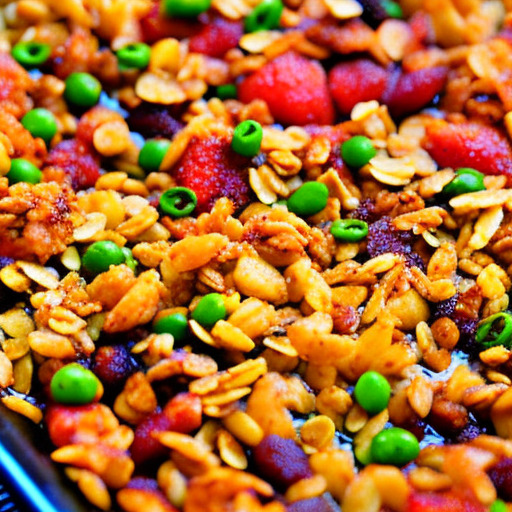
Spoon the granola mixture onto two parchment-paper-lined baking sheets in an even layer. Bake your granola for about 20 minutes then turn using a spatula before returning back into the oven for another 10-15 minutes or until light golden brown.
Stir twice during baking to ensure even browning.Note: It’s common for granola to brown quickly near the end of baking time, so it’s essential to keep in a keen eye on it to ensure that it doesn’t burn.
Variations on the Recipe
There are endless variations when it comes to homemade granola recipes. Here are some ideas for customizing your recipe:
- Mix up different nuts/seeds such as pumpkin seeds, sunflower seeds, or sesame seeds
- Try adding other flavorings like nutmeg, ginger, or pumpkin spice
- If you have a sweet tooth, use more liquid sweetener to make it extra sweet or mix in some chocolate chips
- Add in some dried fruit for extra sweetness like raisins, cranberries, blueberries, dried apricots, or cherries
- In any recipe you follow use your favorite gluten-free cereal instead of oats to make it gluten-free
- To make it paleo-friendly, replace the liquid sweetener with an equivalent amount of mashed bananas
Best Way to Serve and Store Homemade Granola
The sky’s the limit when it comes to ways to serve granola. Here are a few ideas:
- Serve with yogurt and berries for breakfast
- Sprinkle on top of a smoothie bowl for added crunch
- Snack on a handful of granola on its own
- Crumble over ice cream or oatmeal as a yummy topping
If stored properly in an airtight container at room temperature, your homemade granola can last up to 2-3 months.Note:The key is not to store it in the fridge as this can result in a loss of crunchiness.
Health Benefits of Granola
While store-bought granola blends often come with high levels of sugar and additives which may make them not-so-healthy choices, making your own can boost many nutritional benefits. Here are some potential benefits of homemade granola over store-bought:
- Better control of the sugar content
- No additives like artificial sweeteners or flavorings
- You can choose all-organic, non-GMO ingredients
- You can customize the blend according to your dietary needs or preferences.
Clarifying Misconceptions: Granola is often perceived as a sugary food, but its high fiber content can help you fill up faster. Fiber also battles digestion slowdown by keeping things moving along smoothly and preventing constipation.
Troubleshooting Common Problems
Some common problems that people encounter when making granola include clumping or lack of crunchiness. Here are some tips to help troubleshoot these issues:
- To avoid clumping, spread the granola mixture evenly on the baking sheet before baking.
- If your granola lacks crunchiness even after baking (e.g., if there are some very chewy pieces), it might be because it hasn’t had enough time in the oven.
- If you accidentally overbake your granola and end up with burnt bits, all is not lost. Just remove them and keep the rest of the batch.
From Crunchy to Chewy: Mindful Portion Control
While homemade granola is generally a nutritious and healthy food option, it’s essential to maintain proper portion control. Since many ingredients in granola are calorie-dense, it’s easy to go overboard and consume too many calories without realizing it. Here are some guidelines for mindful portion control:
- A 1/4 cup serving size has around 150 calories, so measure out portions carefully.
- Add fresh fruit, low-fat milk, or yogurt to bulk up your servings for extra nutrition without adding too many calories.
- Pack granola in snack bags or containers rather than eating directly from the batch to avoid overeating.
Cost Savings with Homemade: Making Large Batches and Freezing Up
To save money on your homemade granola recipe, consider buying ingredients in bulk. This can help you save money over time. Additionally, it’s a good idea to make large batches of granola so that you don’t have to make it every week.
Note: If you plan to keep large batches of granola over long periods, it is best kept frozen as this prevents the oils from going rancid. Storage bags or jars should allow a good amount of headspace to reduce the risk of freezer burns.
Tips and Tricks from a Renowned Chef
Renowned chefs and culinary experts offer a wealth of knowledge on how to improve and customize recipes even further. Here are some additional tips and tricks for perfecting your homemade granola recipe:
- Toast oats before mixing them- this will give your recipe an extra toasty flavor
- Use coconut oil - it gives the mixture a lovely tropical taste, but bear in mind all fats/oils; have different effects on our health.
- Include Quinoa flakes-It’s an easy way to amp up the protein content of your granola without adding too many extra calories.
- Avoid using brown rice syrup, it causes acrylamide formation when heated above 120C if consumed frequently could increase one’s cancer risk.
Conclusion
Making your own homemade granola can be a great way to enjoy nutritious food packed with healthy nutrients on a budget. There are endless possibilities when it comes to combinations of flavors and ingredients, so you can always make your granola unique and tailored to your individual tastes. With proper portion-control techniques, homemade granola can serve as a filling and satisfying snack. Aside from saving money, this recipe is an ideal way to know what goes into the food you consume daily.
Frequently Asked Questions about Granola Recipe
1. What are the key ingredients for a homemade granola recipe?
The basic ingredients for a granola recipe include rolled oats, nuts (e.g. almonds, pecans, or walnuts), sweetener (e.g. honey or maple syrup), oil (e.g. coconut oil or olive oil), and flavorings (e.g. cinnamon or vanilla extract).
2. Can I customize my granola recipe according to my preferences?
Absolutely! One of the advantages of making your own granola is that you can add or exclude ingredients based on your liking. You can experiment with different nuts, spices, and dried fruits to make your perfect blend.
3. How long does a homemade granola stay fresh?
This depends on the storage methods you use. Properly stored in an airtight container, granola can remain fresh for up to three weeks at room temperature or up to six months in the freezer.
4. What are some creative ways to enjoy granola?
- As a topping for yogurt or smoothie bowls
- Sprinkled over oatmeal or pancakes
- Mixed with milk as cereal
- In trail mix or as a snack on its own
- Baked into cookies or bars
5. Can I make a gluten-free version of granola?
Absolutely! Replace regular oats with certified gluten-free oats and ensure that all other ingredients don’t contain any traces of gluten.
6. How do I achieve clumps in my granola?
To achieve clumps in your granola, use an egg white or aquafaba (the liquid from canned chickpeas) as a binder. Toss the oats and nuts with the egg white/aquafaba mixture before baking.
7. How do I prevent my granola from burning?
Bake the granola in a low-temperature oven of 300°F and stir every 10-15 minutes until golden brown, taking care not to over-brown. Also, use a baking sheet with a parchment paper lining to prevent sticking and burning.