chicken soup recipe
The Ultimate Chicken Soup Recipe: A Comforting and Nutritious Meal for All Occasions
Introduction
Chicken soup has always been known as the ultimate comfort food. It’s a dish that brings warmth and healing to both body and soul. But did you ever wonder where this time-honored meal came from, and why it’s so valued? In this article, we’ll explore the history of chicken soup, its cultural significance, and the health benefits it offers. We’ll also go over the ingredients you need to make the perfect chicken soup, share tips for seasoning and flavoring it, and give you some creative recipe variations. Finally, we’ll explain how to serve your chicken soup and store any leftovers properly.
Why Chicken Soup is the Ultimate Comfort Food
Chicken soup is a beloved dish with an ageless reputation that spans generations. From sneaking up on fussy toddlers to becoming the remedy of choice for sore throats or flu symptoms, chicken soup’s reputation as a comfort food is unmatched.
So why do we associate chicken soup with feeling better? One reason is that it’s easy to digest. The cooked chicken provides protein, which gives energy and strength, while the broth keeps you hydrated. Additionally, when you add vegetables to your soup, they contribute vital nutrients like vitamins (A,C,K) and minerals (potassium, magnesium).
Another reason may be that chicken soup has always been affectionately associated with feelings of warmth and nurturing due to its cultural significance.
The History of Chicken Soup and Its Cultural Significance
The use of chicken in soups dates back to ancient times. Documented evidence goes back as far as the second century AD in Greece but by all indications, it was a popular dish long before then.
Jewish communities are also known for traditional chicken soup-making habits that have been passed down for centuries. Jewish cooks used chicken soup in numerous rituals and nostalgic traditions, which made it an essential dish in their cuisine. Chicken soup was also closely connected with celebrations like weddings or Passover, where each family would make their soup with variations on the recipe.
During World War II, chicken soup became a widespread dish served to American soldiers, especially when they were feeling ill. The soup was so popular that many dining halls had whole sections dedicated to it.
Nowadays, chicken soup can be found in almost every culture around the world. For example, the Chinese have their own version of chicken soup called Congee, which is often served at breakfast time and provides a variety of nutrients.
Health Benefits of Chicken Soup
Science supports the notion that chicken soup is a powerful healing tool on many levels. It’s been shown to be anti-inflammatory and antibacterial because of specific amino acids found in cooked chicken that helps boost immunity. Here are some significant health benefits of this humble comfort food:
- Helps with cold symptoms by relieving congestion due to the warmth and steam from a bowl of hot chicken soup
- Provides nutrients and amino acids that help fight illness
- Aids digestion thanks to its easy-to-digest ingredients
- Is great for rehydration because it contains high levels of electrolytes such as potassium and magnesium
- Promotes weight loss when replacing high-calorie meals.
Ingredients
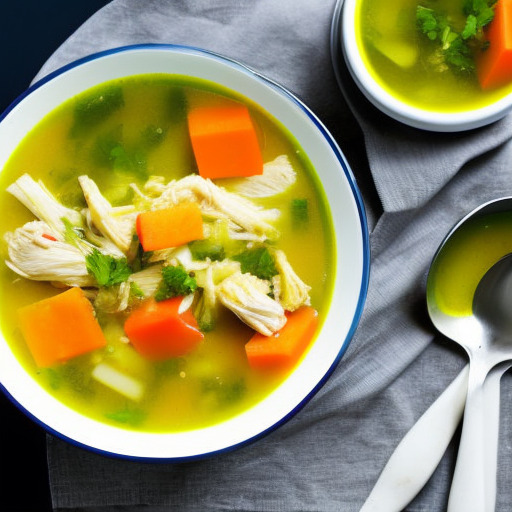
The magic of chicken soup lays within the savory broth’s simplicity combined with healthy vegetables and protein-rich meats. Here are some ingredients you will need:
Chicken: You can use a whole chicken or choose boneless/skinless pieces for convenience.
Vegetables: Stick with the classic combo of onions, garlic, carrots, and celery. You can also add other veggies like potatoes or sweet potatoes.
Aromatics: Essential for giving the soup flavor with aromatic compounds that will trigger your taste and smell senses. Fresh herbs like rosemary, thyme, bay leaves plus peppercorns complement the recipe.
Broth or stock: Homemade is best because it’s richer in nutrients and doesn’t contain any preservatives or additives that store-bought might have. However, If time isn’t on your side, a good quality store-bought product also works well.
Noodles or rice: These serve as perfect additions to chicken soup recipes but are optional.
Preparation
How you prepare the chicken before cooking makes all the difference. Rinse it under cold water to remove any debris, then pat dry before getting started. Here are your options:
- Cut boneless chicken: This option requires no extra preparation; simply dice into medium-sized cubes.
- Bone-in whole chicken: The traditional way to make chicken broth is by cooking a whole bird. This method requires a longer cooking time from four to six hours.
- Boneless thighs/breast: Provides rich meaty flavor without compromising on convenience.
It’s also crucial to find a cooking method that suits your needs. Some methods will require longer prep work than others:
- Stovetop: Requires minimal hardware but can be time-consuming
- Slow cooker: The perfect choice if you want to set it and forget it; can cook for two to ten hours
- Instant pot: With advanced features like pressure cooking, this method can cook chicken soup in under an hour without compromising on taste and quality.
Seasoning and Flavoring
Seasoning chicken soup refers to the process of adding salt, pepper, and other spices to the broth. However, you also need to add depth of flavor with aromatics such as onions, garlic, carrots, celery. Fresh herbs like thyme, rosemary, or bay leaves are used to give it an addictive aroma that makes your taste buds sing.
Balance your flavors of sweet, salty, and sour by adding ingredients like soy sauce or vinegar. Adding a touch of sugar can balance sourness without raising blood glucose levels. You can use honey for a healthy version.
Tips for Perfect Chicken Soup
Skimming the fat off the top of the soup is a crucial step in making perfect chicken soup. It has many benefits, including reducing calories and balancing flavors. Here’s how to do it:
- Let the soup cool down for 5-10 minutes
- Spoon off any visible fat at the top.
- You can also use a fat separator or cheesecloth bag to filter out any grease before reheating.
When adding noodles or rice, always cook separately first then add them during the last few minutes to avoid overcooking. Follow package directions carefully to ensure they don’t get soggy or hard.
Creative Variations
Get creative with your chicken soup variations if you want to spice up your traditional recipe:
Gluten-free: If you’re looking for a substitute for noodles or any gluten-based product in your chicken soup recipe - try rice paper wraps (cut into small pieces) or sliced zucchini noodles.
Spicy: Give it a kick with chili powder or hot sauce
Chicken Lemon: Add lemon juice or slices to your soup after cooking is done. That’s it! This simple addition adds a refreshing tangy twist to the recipe.
Serving and Storing
When serving, pair the warm and satisfying chicken soup with comfort food classics like bread, crackers, or a green salad.
To store leftover chicken soup, cool it to room temperature, then refrigerate in an airtight container for up to 4 days. Alternatively, freeze it for up to three months and thaw it in the refrigerator before reheating.
Conclusion
In summary, homemade chicken soup offers many health benefits because of its nutritious ingredients and healing power. From the classic broth-based recipe to gluten-free variations, you can make your bowl of chicken soup unique and satisfying. So next time you’re feeling down or craving comfort food, whip up a pot of this ultimate comfort meal and enjoy its soul-warming qualities.
Frequently Asked Questions About Chicken Soup Recipe
1. What are the ingredients needed to make chicken soup?
Chicken soup requires basic ingredients such as chicken, onion, garlic, carrot, celery, salt, pepper, and water. You can also add herbs like thyme and bay leaf and other spices of your choice.
2. Can I use other parts of the chicken aside from the whole chicken?
Yes, you can use the chicken parts that you prefer, such as the wings, thighs, or drumsticks. Each part adds a distinct flavor to the broth.
3. Do I need to cook the chicken before adding it to the soup?
No, cooking the chicken before adding it to the soup is not necessary. You can add it raw or whole and let it cook while boiling the soup.
4. How long should I let the soup simmer?
You should let the soup simmer for at least 1 hour to allow the flavors of the ingredients to meld together. Simmering for longer hours makes a richer broth.
5. Can I freeze my leftover chicken soup?
Yes, you can freeze your leftover chicken soup for later consumption. Make sure that you put it in an airtight container and label it with the date.
6. What vegetables can I add to my chicken soup?
- Corn
- Zucchini
- Potato
- Parsnip
- Bell pepper
- Mushroom
- Kale
7. How can I make my chicken soup more flavorful?
- Using chicken with bones enhances the flavor of the broth.
- Add fresh herbs like parsley and cilantro.
- Add spices like cumin, paprika, or turmeric to add a depth of flavor.
- Browning your chicken, vegetables, or aromatics creates a richer taste.
There you have it! These frequently asked questions will surely help you in making the best chicken soup recipe for your family and loved ones. Enjoy!