pad thai recipe
Pad Thai Recipe: Traditional and Modern Twists on This Classic Dish
Pad Thai is a classic dish that originated in Thailand, and has since become a popular choice for food lovers worldwide. Its combination of savory, sweet, sour, and salty flavors makes it a unique experience for the taste buds. Pad Thai is essentially a stir-fried noodle dish with protein, vegetables, and fish sauce for seasoning. In this article, we’ll explore both the traditional recipe and some modern twists on it.
Introduction
Before we dive into the ingredients and recipe, it’s essential to understand the origin of Pad Thai and why choosing the right ingredients is crucial. Pad Thai was invented during World War II as a way for the Thai government to promote nationalism by incorporating local ingredients into a dish that was easy to make and affordable. The use of rice noodles instead of wheat noodles is an example of this substitution.
Choosing high-quality rice noodles is crucial to obtaining authentic flavor in your Pad Thai recipe. Look for flat, thin rice noodles marketed as “Pad Thai Noodles” at your local Asian market or online store. Tofu, bean sprouts, shrimp or chicken are also staples in traditional Pad Thai recipes. It’s essential to select fresh ingredients at their peak ripeness to ensure the flavors blend together well.
Ingredients
The main ingredients for Pad Thai are rice noodles, protein (tofu, shrimp or chicken), bean sprouts, tamarind paste, fish sauce, palm sugar, ground peanuts, and eggs.
Traditional Ingredients
- Rice noodles: 8 ounces flat rice noodles.
- Tofu: 1 cup cubed firm tofu.
- Bean sprouts: 1 cup fresh bean sprouts.
- Shrimp or chicken: 1/2 pound medium shrimp or chicken breast.
- Tamarind paste: 2 tablespoons tamarind paste.
- Fish sauce: 4 tablespoons fish sauce.
- Palm sugar: 4 tablespoons palm sugar.
- Ground peanuts: 1/4 cup roasted peanuts.
Modern Twists on Ingredients
- Chicken or pork substitute: Replacing Shrimp or tofu with grilled chicken or pork is a good way to enhance flavor for people who do not like seafood or meatless dishes.
- Substitution for peanuts due to allergy: Almond and cashew nut can substitute for peanut. The nutritional content may differ, but they are still rich in healthy fats and protein.
Preparation Method
Once you have selected your ingredients, here’s how to cook traditional Pad Thai.
Prepping the Ingredients
Using hot water, soak rice noodles in a bowl until they are soft but not overcooked. Boil your shrimp /chicken, then sauté them before removing from heat. Separately prepare minced garlic and red pepper flakes with bean sprouts, scallions, and eggs.
Making Pad Thai Sauce
Mix together tamarind paste, fish sauce, and palm sugar in a small bowl until smooth to make your Pad Thai sauce.
Stir-Frying Ingredients Together
The first step in stir-frying is adding the garlic and red pepper flakes to the pan to give the dish some extra flavor before adding the noodles. Then add bean sprouts and eggs until cooked; finally, add shrimp or your protein of choice.
Presentation and Serving
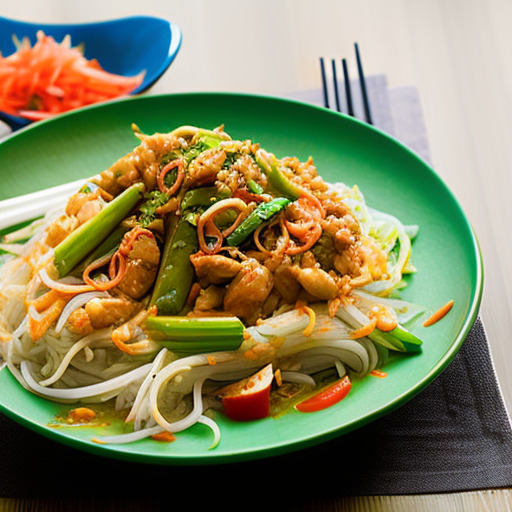
Pad Thai is a colorful dish, and presenting it in a traditional way emphasizes this fact. Common traditional presentation styles include layering the dish by garnishing with fresh lime wedges, cilantro, and peanuts arranged along the edges of the plate and served with chopsticks.
Presentation Tips
Consider adding new twists to your Pad Thai recipe to create different presentations by using different colors of vegetables or serving Pad Thai curried style or as spring rolls.
Serving Suggestions
Lime wedges are a refreshing addition to your dish as they provide an additional citrus taste with nutritional value benefits, such as supporting the production of collagen for healthy skin. We recommend serving Pad Thai alongside cocktails like Margaritas, sangria, and tropical juice for an enjoyable experience.
Nutritional Information
Pad Thai is nutritious, which comes from essential vitamins, minerals, protein, and dietary fiber. Noodles are an excellent source of complex carbohydrates for energy while also being gluten-free. Additionally, tofu has high levels of plant-based protein that can fulfill your daily requirement of amino acids. Bean sprouts have potassium and protein while also acting as antioxidants due to their vitamin-C content.
Health Benefits of Ingredients Used in the Recipe
- Rice noodles consist primarily of complex carbohydrates that provide energy needed throughout the day.
- Tofu provides up to 6g protein per cup which contains all nine essential amino acids that your body requires.
- Shrimps are low in fat but high in protein and omega-3 fatty acids that make them effective in promoting heart health healing.
- Bean sprouts contain antioxidants that help fight against inflammation caused by erratic lifestyle patterns.
Summary of Nutritional Facts
A 100-gram serving size of Pad Thai contains 333 calories containing 27.6 g of carbohydrate, 16g protein, and 17.7g fat.
Localizing Pad Thai
Different regions have variations in their presentation and cooking process based on local cultural practices or availability of recipes.
Popular Variations by Region
For example, Bangkok-style Pad Thai often uses Shrimps and peanuts are charred to add a smoky flavor to the dish. Northern-style includes crispy fried pork served with hot chili or fermented fish sauce.
Frequently Asked Questions (FAQs)
Here are some common questions regarding the Pad Thai dish:
Can I use peanut butter instead of ground peanuts?
Yes, you can use natural peanut butter instead of ground peanuts. You may add soy sauce and broth to obtain a consistent texture.
How do I make vegetarian Pad Thai?
You can make a vegetarian version by replacing shrimp or chicken with mushrooms, soya chunks, and crunchy vegetables like celery.
Video Demonstration/Step-by-step instructions
The best way to learn how to make Pad Thai is through visual observation which can be done quickly through YouTube. Here is a step-by-step tutorial on how to cook traditional Pad Thai:
[Link to Video]
Conclusion
In conclusion, Pad Thai is an excellent dish with a rich history behind it combining sweet, sour, savory, and salty flavors in one plate. With these ingredients that can be modified slightly or heavily to create unique twists in taste while incorporating alternatives that cater to dietary requirements like veganism or being allergic to peanuts. With this recipe guide, you can enjoy Pad Thai cooked at home that is tailor-made for you or your guests. So, go ahead with confidence and add your variation to this classic dish Pad Thai.
Frequently Asked Questions About Pad Thai Recipe
1) What Is Pad Thai?
Pad Thai is a popular Thai dish made with rice noodles, stir-fried with vegetables, eggs, meat, tofu and flavored with sweet-tangy sauce. It is a perfect balance of flavors that makes it the ultimate comfort food.
2) What Are the Key Ingredients for Making Pad Thai?
- Rice Noodles
- Protein (Shrimp, chicken or tofu)
- Eggs
- Vegetables (Bean sprouts, green onions, garlic)
- Peanuts
- Cilantro (optional)
- Lime wedges (optional)
3) Is It Easy to Make Pad Thai at Home?
Yes! It’s super easy. With a few basic ingredients and simple preparation steps, you can make delicious pad thai in your own kitchen.
4) What Is the Best Sauce for Pad Thai?
The best sauce for pad thai is a combination of tamarind paste, fish sauce, brown sugar or palm sugar and chili flakes. You can also add some lime juice for a tangy flavor.
5) Can I Substitute Any Ingredient in Pad Thai Recipe?
Absolutely! You can experiment with different ingredients like broccoli, bell pepper or mushrooms instead of traditional vegetables like bean sprouts and green onions. You can also swap out shrimp for chicken or tofu if you prefer plant-based protein.
6) How Do I Store Leftover Pad Thai?
You can store leftover pad thai in an airtight container in the refrigerator for up to 3-4 days.
7) Can I Make Pad Thai Recipe Ahead of Time?
Yes, you can make pad thai ahead of time but it’s best to cook it fresh. However, you can chop your vegetables, meat or tofu beforehand and make the sauce ahead of time so that when you’re ready to put everything together, it takes only a few minutes.