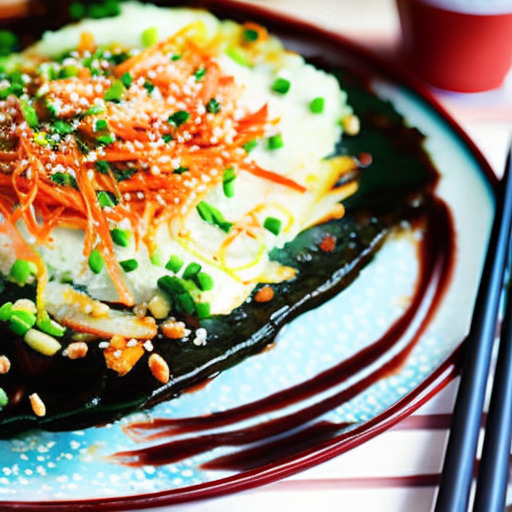
okonomiyaki recipe
Okonomiyaki Recipe: The Complete Guide
Okonomiyaki is a traditional Japanese dish that is often referred to as a Japanese-style pancake or pizza. It is a savory dish that is made with flour, eggs, and shredded cabbage as its base, and topped with various ingredients such as meat, seafood, vegetables, and sauces. Okonomiyaki can be found in many parts of Japan and has various regional variations.
History and Origins of the Dish
The name “okonomiyaki” comes from the words “okonomi,” which means “what you like” or “what you want,” and “yaki,” which means “grilled” or “cooked.” This highlights the fact that this dish can be made in various ways, depending on the individual’s liking.
The origins of okonomiyaki can be traced back to the Japanese Kansai region (Osaka), where it was first sold as a street food during the 1930s. Initially, it was known as “chibumura,” which translates to “grilled noodles wrapped in egg.” The dish eventually evolved and started including other ingredients such as cabbage and became known as okonomiyaki.
Different Types of Okonomiyaki
There are three main types of okonomiyaki based on their origin:
- Kansai-style: This is the original style of okonomiyaki that comes from Osaka. It typically consists of flour-based batter, cabbage, pork belly slices, green onions and topped with okonomiyaki sauce.
- Hiroshima-style: This variety originated in Hiroshima and features layers of ingredients - cabbage, bean sprouts, pork, eggs - stacked on top of a base of grilled noodles (yakisoba) and batter. Toppings are added after the pancakes are finished cooking.
- Tokyo-style: This style is thinner, crispier, and lighter in texture than the other two. It is usually served with negi (green onion) instead of cabbage, and seafood is often used as the main ingredient.
Ingredients
The main ingredients used in okonomiyaki are:
- All-purpose flour or gluten-free flour blend
- Eggs
- Cabbage (or napa cabbage)
- Bonito flakes or dried tuna flakes (optional)
- Green onions (or scallions)
- Pork belly slices or bacon (optional)
- Other fillings such as shrimp, squid, octopus, cheese, mushrooms, etc. (optional)
There are many variations of okonomiyaki, and some recipes suggest substituting cabbage with shredded Brussels sprouts or kale to make it healthier. Likewise, vegetarians can replace meat with tofu or tempeh. Other alternative fillings can include kimchi or mochi.
Tools and Equipment
To make okonomiyaki at home, you will need the following tools and equipment:
- A large mixing bowl
- A wire whisk or fork for mixing the batter
- A grater for shredding the cabbage
- A large skillet or griddle for cooking
- A spatula or metal turner for flipping
- An okonomiyaki spatula (optional) - helps for flipping the pancake neatly and making it round.
For more advanced versions of okonomiyaki, you may need additional equipment such as a teppanyaki grill or hibachi grill.
Preparing the Batter
Before making the batter, it is essential to shred the cabbage finely and remove any excess water by lightly pressing it between paper towels. For a basic recipe for the batter, mix together:
- 1 cup all-purpose flour (or gluten-free flour blend)
- 1 tsp baking powder
- 1/2 tsp salt
- 1 egg
- 3/4 cup water (or chicken or vegetable stock)
Whisk everything together until smooth. You can adjust the consistency by adding more liquid or flour as needed. If using a gluten-free flour blend, add xanthan gum to improve texture and prevent crumbling. Let the batter rest for at least 10 minutes while you prepare the toppings.
Choosing Toppings
The toppings are what make okonomiyaki so versatile and customizable. Here are some traditional and non-traditional suggestions.
Traditional Toppings
- Pork belly slices or bacon
- Cabbage (or napa cabbage)
- Bonito flakes or dried tuna flakes
- Aonori (dried green seaweed powder)
- Katsuobushi (bonito fish flakes)
- Green onions/scallions (thinly sliced)
- Tenkasu (tempura bits)
Non-Traditional Toppings
- Negi (thinly sliced leeks) instead of cabbage
- Shrimp or other seafood
- Cheese (grated mozzarella or cheddar)
- Mushrooms (shiitake or button mushrooms, sautéed beforehand)
- Sriracha sauce instead of okonomiyaki sauce
- Kimchi instead of cabbage
Cooking Techniques: Stovetop Method
The stovetop method for cooking okonomiyaki is the easiest and most common method for making it at home. Here are the basic steps:
- Heat a non-stick skillet over medium heat.
- Lightly oil the skillet or use cooking spray.
- Pour in enough batter to form a pancake that’s about 1/2-inch thick.
- Add the cabbage, pork belly slices, green onions or other desired toppings onto the pancake batter evenly.
- Cover with a lid and cook for 4-5 minutes until golden brown on one side.
- Flip the pancake over carefully using a metal turner or spatula and cook on the other side for another 4 to 5 minutes until cooked through.
- Remove from heat and drizzle the top with okonomiyaki sauce, mayonnaise, katsuobushi flakes, and aonori powder.
- Serve warm.
To avoid making mistakes when cooking okonomiyaki on a stove, make sure not to flip it too many times as it can cause the filling to fall apart. Also, do not add too much liquid when preparing the batter if you want to achieve crisp edges and soft centers.
Cooking Techniques: Grill Method
The grill method is preferred by high-end restaurants or street vendors. It involves using a teppanyaki griddle or a hibachi grill and allows for more precise cooking. Here is the basic technique:
- Heat your griddle or grill over high heat.
- Lightly oil the surface with vegetable oil.
- Edit a thin layer of batter on the surface, then add cabbage, pork belly slices, whatever toppings you want, and pour another layer of batter on top.
- Cover with a lid and cook for about 3-5 minutes.
- Flip it over very quickly by using two spatulas or an Okonomiyaki spatula to avoid splitting it; Cook the other side for another 2-3 minutes.
- Add toppings such as okonomiyaki sauce, mayonnaise, katsuobushi flakes, and aonori powder before serving.
The grill method allows for more cooking precision since you can control the heat level by adjusting the distance between the food and the heat source. However, this method requires special equipment that may not be available to everyone.
Plating and Presentation
In Japan, okonomiyaki is typically served on a hotplate at the table and eaten directly from there. At home, it can be presented similarly or sliced into wedges and transferred to plates. Typically it is topped with Okonomiyaki sauce, mayonnaise zigzagging over the top in rice bowls sprinkled with bonito flakes or dried seaweed
To make your presentation more visually appealing at home, line the plate with arugula leaves or shredded carrots or radicchio as they complement okonomiyaki’s taste well. Alternatively, you can use wooden chopsticks to poke multiple holes on the pancake’s surface and spoon sauce into those holes to create a more decorative effect.
Popular Regional Variations
Despite having a basic recipe, okonomiyaki varies from region to region and from restaurant to restaurant. Some popular regional varieties include:
Kansai-style vs. Hiroshima-style Okonomiyaki
The main differences between Kansai-style and Hiroshima-style okonomiyaki are that the former does not use noodles in its batter and adds sauces right after cooking, while the latter uses noodles as a base and fills it with layers of ingredients - then adds sauces before serving.
Tokyo-style or Kansai-style Okonomiyaki
Tokyo-style okonomiyaki is thinner in size than its Kansai or Hiroshima counterparts. Tokyo-style’s main ingredient is seafood with nori seaweed strips placed inside before cooked. Meanwhile, Kansai-style is known for using filler ingredients mixed into the batter instead of layering them on top.
Pairing with Sides and Beverages
A refreshing side dish to have with okonomiyaki is a simple vegetable salad made with mixed greens or shaved cabbage, topped with drizzled vinaigrette. Most people prefer drinking beer (Asahi Super Dry or Yamato Honey Beer) when eating okonomiyaki; of course, you can always try different drinks to discover what best suits your preference.
Making Okonomiyaki Sauce from Scratch
You can make your own homemade sauce for okonomiyaki instead of purchasing an industrial bottle of sauce from Asian grocery stores near you. Below is a basic recipe:
- 1/2 cup ketchup
- 1/3 cup Worcestershire sauce
- 1-2 tbsp soy sauce, to taste
- 1 tbsp honey (optional)
- 1 tsp Dijon mustard (optional)
Combine all the ingredients in a small mixing bowl and mix thoroughly. Taste it and adjust it to your liking (if you want it sweeter, add more honey, if you want it sourer, add more Worcestershire sauce). It is versatile so feel free to experiment with the flavor.
Conclusion
Okonomiyaki is a versatile and delicious savory pancake that is easy to prepare and customize at home. With the right tools and toppings, anyone can make restaurant-style okonomiyaki using stovetop or grill methods. By experimenting with regional varieties and developing a homemade sauce - it provides unlimited room for creativity. Bon appétit!
FAQs About Okonomiyaki Recipe
1. What is Okonomiyaki?
Okonomiyaki is a savory Japanese pancake-like dish that is made of flour, eggs, shredded cabbage, and various toppings like pork belly, shrimp, squid, and scallions.
- Toppings
- Pork Belly
- Shrimp
- Squid
- Scallions
2. How do I make Okonomiyaki?
To make Okonomiyaki, you need to mix together flour, eggs, water, shredded cabbage and any other desired ingredients (e.g., meat, seafood, vegetables). Then cook on a griddle until golden brown and top with Okonomiyaki sauce, Kewpie mayonnaise, dried bonito flakes, and green onions.
3. What is Okonomiyaki sauce made of?
Okonomiyaki sauce is a thick and sweet-salty Japanese condiment similar to Worcestershire sauce. It’s typically made with soy sauce, ketchup, sugar, Worcestershire sauce, oyster sauce and sometimes honey or mirin.
4. Can I make my own Okonomiyaki Sauce?
Yes! In fact making it at home is pretty easy. You will need soy sauce (Kikkoman brand specifically), Worcestershire Sauce (Lea & Perrins Brand specifically), ketchup , mirin , oyster sauce and sugar. Adjust the sugar depending on your preference for sweetness. Boil all the ingredients for 5-7 minutes or until it has thickened to the desired consistency.
5. What are the different types of Okonomiyaki?
There are mainly two types of Okonomiyaki. Hiroshima-style and Osaka-style Okonomiyaki. Hiroshima-style okonomiyaki is made on a griddle in layers (cabbage, noodles, meat), while Osaka-style okonomiyaki mixes all the ingredients together like a pancake batter.
- Types
- Hiroshima-style Okonomiyaki
- Osaka-style Okonomiyaki
6. Can I make vegetarian Okonomiyaki?
Yes! Simply substitute vegetable broth for dashi (soup stock made from fish), or use other vegetarian-friendly options as protein like tofu or edamame.
7. Can I store leftover Okonomiyaki?
You can store leftover Okonomiyaki by wrapping it in plastic wrap and refrigerating it for up 2-3 days. To reheat it, warm it up in a skillet over medium heat until heated through and crispy again.