fruit salad recipe
A Delicious Fruit Salad Recipe for a Refreshing Summer Treat
Fruits are an essential part of our diet, providing us with vitamins, minerals, and fiber that promote healthy living. Incorporating them into our meals in the form of salads will not only help us meet our dietary needs but also provide us with a refreshing and delicious summer treat. In this article, we’ll share a delicious fruit salad recipe that you can enjoy with your family and friends.
Benefits of Eating Fruits
Before we delve further into the recipe, let’s talk a little bit about the benefits of eating fruits.
- Promotes Digestive Health: Fruits are rich in fiber that helps keep our digestive system healthy by preventing constipation.
- Boosts Immunity: Fruits are packed with vitamins and antioxidants that help strengthen our immune system to fight off diseases.
- Low in Calories: Fruits naturally contain low calories making it an excellent choice for people who want to lose weight or maintain a healthy weight.
- Reduced Risk of Heart Diseases: Fruits are rich in nutrients such as potassium and magnesium that help regulate blood pressure and reduce the risk of heart disease.
The benefits of eating fruits are numerous, so let’s dive into how we can create a perfect fruit salad using the following recipe.
Selecting the Fruits
A fruit salad is only as good as its ingredients; thus, selecting the right type of fruits is essential. When selecting fruits for your salad, consider the following criteria:
- Select fresh fruits that are firm, plump, and free from bruises and blemishes.
- Pick fruits that are in-season to maximize their flavor and nutritional value.
- Choose a variety of colors to make your salad more visually appealing.
- Select fruits with varying textures, such as crisp apples, soft oranges, and juicy grapes.
The type of fruits you select for your salad may vary depending on the season and your taste preferences. Some of the common fruits used in fruit salads include:
- Watermelon
- Cantaloupe
- Honeydew Melon
- Grapes
- Strawberries
- Kiwi
- Pineapples
- Blueberries
- Raspberries
- Mangoes
- Bananas
- Oranges
Equipment Needed
Before embarking on making the salad, ensure you have the following equipment ready:
- A sharp knife for cutting and slicing the fruits into bite-sized pieces.
A mixing bowl to mix all the fruits together.
Serving bowls or plates to present your fruit salad.
Ingredients Required
To make a delicious fruit salad, you’ll need to have the following ingredients:
- Sugar (Optional)
- Lemon Juice(Optional)
- Fresh mint leaves (Optional)
- Honey (Optional)
- Sugar:
- Lemon Juice:
- Add nuts such as walnuts or almonds for crunchiness.
- Drizzle honey over your fruits for extra sweetness.
- Add yogurt for more liquid texture.
- Add fresh herbs such as basil or mint leaves to give the salad a unique taste.
- Include other ingredients such as chia seeds or granola for nutty textures and an added crunch to your salad
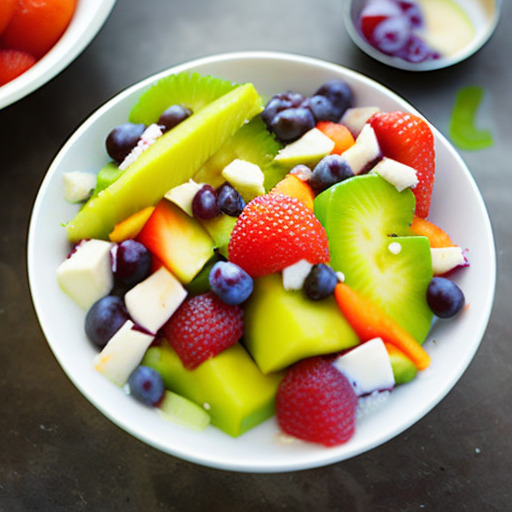
- Use a clear glass bowl to showcase the vibrant colors of your fruit salad.
- Add larger fruits such as slices of watermelon or pineapple to the center of the dish.
- Add a dollop of whipped cream or Greek yogurt at the top-center of your fruit salad bowl for an exciting twist.
- Serve the fruit salad in individual bowls with a sprig of mint and a slice of citrus on top.
- Incorporating fruit into our diet can help reduce inflammation in the body, which is linked to several chronic illnesses.
- Some fruits such as grapes have a high level of resveratrol, which helps protect against various types of cancer.
- Fruits contain flavonoids, compounds found in plants that help improve heart health.
- Orange juice and zest
- Lime juice and honey
- Balsamic vinegar and olive oil
- Sour cream and brown sugar
Fruits:Watermelon Honeydew Melon Cantaloupe Blueberries Raspberries Grapes Kiwi Strawberries Pineapples All fruits should be ripe before use. If you choose tropical fruits such as bananas and kiwis, make sure they are not too ripe as this tends to make them mushy when used in salads.
How to Prepare the Fruit Salad Recipe
To begin with, prepare the ingredients by washing and cutting the fruits into bite-sized pieces. Remember to remove the seeds and skins from fruits that require it.
Place all cut fruits in a large mixing bowl. If you desire, you can sprinkle some sugar or lemon juice over the fruit to enhance their flavor and keep them fresh for longer.
You can use regular granulated sugar or a natural sweetener like honey or maple syrup. Adding sugar will help extract the juices from the fruit and create a delicious syrup that blends well with all fruits.
If you decide to add lemon juice, squeeze some fresh lemon and drizzle it over the fruit. This adds a refreshing citrus flavor and helps keep the fruit from browning.
Once everything is in the bowl, toss all the ingredients gently to combine everything evenly.
If you desire, add fresh mint leaves to the mix as they yield a pleasant aroma that complements well with fruits. Set aside your salad for 10-15 minutes to blend the flavors together.
Mixing and Storing Your Fruit Salad
Mixing your fruit salad is simple once you have prepared all of your fruits. First, you will need to gently toss your fruits together with a large spoon or spatula until they are evenly mixed.
If there is any leftover salad, store them in an airtight container in the refrigerator for up to two days to maintain freshness. It’s best to finish the fruit salad within 24 hours of making it for optimal flavor and texture.
Variations on Fruit Salad Recipe
The beauty of a fruit salad is that you can mix things up by adding different flavors, dressings, toppings, etc. Here are some variations you can try:
Serving Suggestions
Your fruit salad doesn’t have to look dull; instead, present it in a visually appealing arrangement that will increase its desirability. Some tips on serving the salad include:
The serving size also matters; ideally, half a cup is enough per person.
Health Tips when Consuming Fruits in Your Diet
Fruits are packed with vitamins, fiber, and antioxidants that promote optimal health when consumed in moderation. Here are some additional health benefits associated with consuming fruits in our diet:
It’s important to note that consuming large amounts of sugar from fruits can still lead to weight gain and other associated health issues. It’s always best to consume fruits as part of a well-balanced diet and opt for fresh, whole fruits instead of processed juices or dried fruit snacks that tend to have added sugars.
Conclusion
In conclusion, making a healthy fruit salad is relatively easy and quick to prepare, especially during summer when we can take advantage of the ample availability of fresh fruits. Using the tips above, you can create a refreshing and nutrient-packed fruit salad that everyone can enjoy while reaping incredible health benefits.
Fruit Salad Recipe FAQs
1. What fruits can I use in a fruit salad?
You can use a variety of fruits such as strawberries, blueberries, raspberries, kiwi, pineapple, grapefruit, mangoes, and oranges. It all depends on your preferences and what’s in season.
2. Can I make a fruit salad in advance?
Yes! In fact, it’s recommended to make the fruit salad at least an hour before serving to allow the flavors to blend together. Cover the bowl with plastic wrap and store it in the fridge until ready to serve.
3. Can I add sugar to my fruit salad?
Sure! However, the natural sweetness of the fruit should be enough. If you feel like you need it sweeter, try adding honey instead of sugar.
4. What dressings can I use for my fruit salad?
5. How do I keep my fruit from turning brown?
Toss your cut fruits with lemon or lime juice. The acidity slows down the oxidation process which causes browning.
6. Can I add nuts to my fruit salad?
Absolutely! Walnuts or almonds are a great addition to a fruit salad. Toast them first for extra flavor.
7. How long can I store leftover fruit salad?
Fruit salads are best eaten within 24 hours of making them. However, if you cover the salad with plastic wrap and store it in an airtight container in the fridge, it can last up to 3 days.