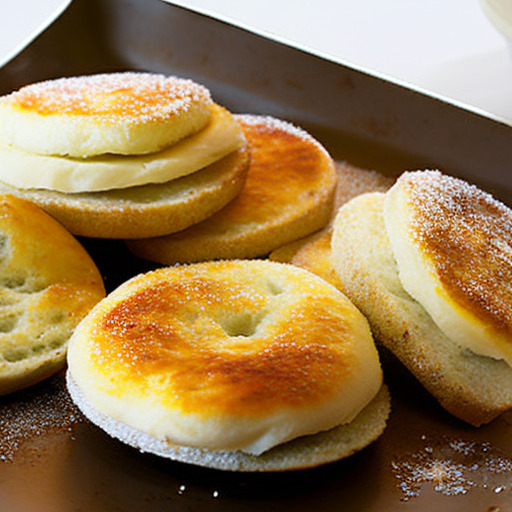
english muffin recipe
How to Make English Muffins at Home: A Step-by-Step Guide
Introduction
English muffins are a popular breakfast food that can be enjoyed in many ways, from simply slathering butter on them to using them as the base for elaborate breakfast sandwiches. But did you know that making your own English muffins at home is not only possible, but also a rewarding experience? In this guide, we’ll take you through the steps to make delicious English muffins from scratch.
Ingredients and Equipment
Before we get started, here’s what you’ll need:
- 4 cups of all-purpose flour, plus extra for dusting
- 1 package of active dry yeast (2 1/4 tsp)
- 1 1/2 tsp salt
- 2 tbsp granulated sugar
- 1/4 cup unsalted butter, melted
- 1 3/4 cup whole milk, warmed
- Cornmeal for dusting
As for equipment, you’ll need:
- A large mixing bowl
- A stand mixer with a dough hook attachment (optional)
- A rolling pin
- A biscuit cutter or round cookie cutter
- A griddle or a large skillet
If you have dietary restrictions, feel free to make substitutions or adjustments as needed. For example, you can use gluten-free flour instead of all-purpose flour, or plant-based milk instead of whole milk.
Making the Dough
Now that you have everything you need let’s start by making the dough:
- In a small mixing bowl, mix the yeast and warm milk together until the yeast has dissolved. Let it rest for a few minutes until the mixture becomes foamy.
- In a large mixing bowl, whisk together the flour, salt, and sugar.
- Add the melted butter to the yeast mixture and stir until combined.
- Pour the wet ingredients into the dry ingredients, and mix until everything comes together in a shaggy dough.
- If using a stand mixer, knead on low speed with a dough hook attachment for 8 minutes. If kneading by hand, turn the dough out onto a floured surface and knead for 10 minutes.
Shaping the Dough
Next, we’ll shape the dough into English muffins:
- Punch down the risen dough and transfer it to a lightly floured surface. Roll out the dough into a thickness of 1/2 inch.
- Cut out rounds of dough using a biscuit cutter or round cookie cutter.
- Dust each muffin round with cornmeal on both sides.
- Transfer muffins to wax paper or parchment paper lined baking sheets, making sure to keep them at least 1 inch apart. Cover them loosely with plastic wrap and let them rise for about 30-45 minutes or until slightly puffy.
Proofing and Baking
Now that we’ve shaped our dough into muffins, it’s time to proof and bake them:
- To proof the muffins, heat up your griddle or skillet over medium heat.
- Cook the muffins in batches for about 7-8 minutes on each side until golden brown. Make sure to flip them carefully so as not to deflate them.
- Transfer finished muffins onto a wire rack to cool completely.
- If you’re not planning to use them right away, store the cooled muffins in an airtight container or freezer bag.
Variations and Customizations
While English muffins are delicious on their own, you can add some flavor and interest to your homemade batch with these ideas:
- Add shredded cheese, chopped herbs, or spices like garlic powder or onion powder to the dough before kneading for extra flavor.
- Top cooked muffins with your favorite spreads like butter, jam, honey, cream cheese or even Nutella! Fry an egg and place it between two muffin halves seasoning it with salt or hot sauce.
Troubleshooting Common Issues
As with any recipe, there may be some hiccups along the way when making English muffins. Here are some solutions for common issues:
- If the dough doesn’t rise properly, make sure that your yeast is still active and you’ve used warm enough milk.
- If the muffins come out flat after cooking or do not puff up during proofing, let the dough rest for a few more minutes before baking to give them time to rise.
- If they come out too dense and heavy instead of fluffy, it’s possible you’ve over-kneaded the dough. Try kneading faster and applying less pressure next time.
Storing and Reheating
If you find yourself with leftover English muffins:
- Store in an airtight container at room temperature for 2-3 days or freeze them up to 3 months.
- To reheat, toast them on a griddle or in a toaster oven until lightly browned to warm and refresh their textures.
Serving Suggestions
English muffins can be used in many dishes beyond the usual breakfast sandwich. Try using one of these serving suggestions:
- Turn them into mini pizzas by baking muffins halves with your favorite pizza toppings.
- Turn them into burger buns by splitting a muffin and adding cooked ground beef and toppings like lettuce, tomato, and cheese.
- Use them as the base for Eggs Benedict by topping halves with Canadian bacon, poached eggs, and hollandaise sauce.
Conclusion
Making English muffins from scratch may seem intimidating, but once you try it out, you’ll realize that it’s not so difficult after all. With the right ingredients and equipment, you can make your own batches of fluffy, flavorful English muffins any time you want. So go ahead and give it a try- you never know what wonderful flavors you might uncover in your kitchen!
7 FAQs about English Muffin Recipe
1. What are the ingredients for making English muffins?
The basic ingredients for making English muffins include flour, yeast, sugar, salt, milk and butter. You can also add other ingredients for flavor enhancement such as herbs or cheese.
2. Can I make English muffins without yeast?
No, yeast is a necessary ingredient for making English muffins. It helps in the rising and creation of air pockets which gives the muffin its signature texture.
3. Can I substitute milk with water?
Yes, you can replace milk with water if you would like to make a dairy-free version of your English muffins or if you don’t have any milk in your kitchen. However, using milk will give the muffins a richer flavor and tender crumb.
4. How do I know when my English muffin is cooked?
You will know that your English muffin is cooked when the top is golden brown and the sides look dry and firm. You can confirm this by gently pressing on the surface of the muffin, which should feel slightly firm yet springy to the touch.
5. Can I bake my English muffins instead of cooking them on a griddle?
Although it’s possible to bake English muffins in an oven, it is recommended to cook them on a griddle as it provides an even heat distribution and allows you to adjust the cooking time for each side depending on your preferred level of doneness.
6. How do I store my homemade English muffins?
- Cool down your English muffin completely before storing
- Wrap in plastic bag or airtight container or ziplock bag or aluminum foil
- You can store it in the fridge for up to 5 days or freeze for up to one month.
7. How do I eat my English muffin?
You can toast your muffin and enjoy it with butter, jam, honey, peanut butter, cream cheese, or use it as a base for your favorite breakfast sandwich.